
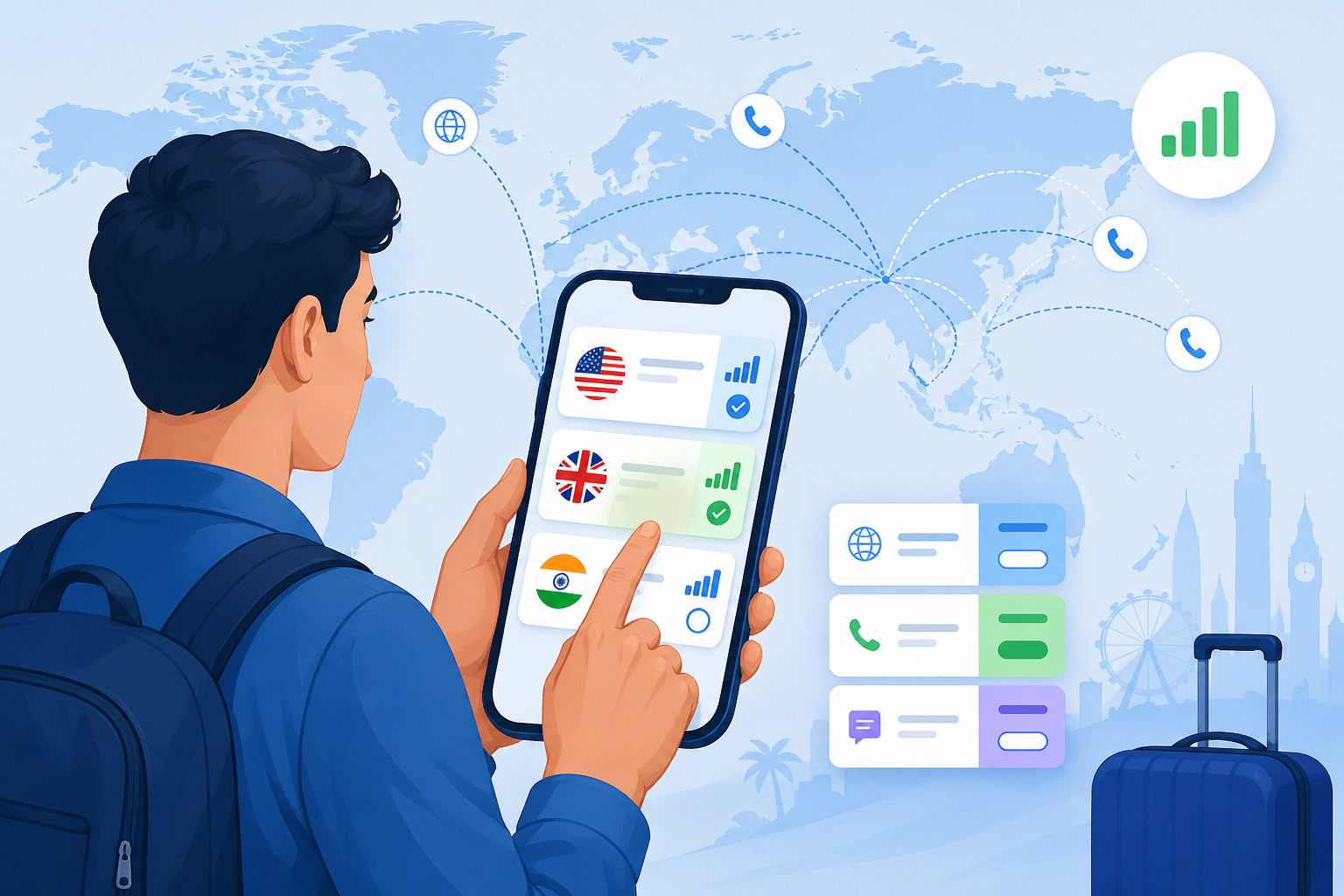
Staying connected across borders is easier than ever, but choosing the right international calling plan can still feel confusing. Some plans look cheap at first, but later you may find extra charges, limited country coverage, poor call quality, or expensive roaming fees.
The best international calling plan depends on where you call, how often you call, whether you need mobile data, and how long you need the plan for. Before buying any plan, it is important to compare the real value, not just the advertised price.
What Is an International Calling Plan?
An international calling plan is a phone service package that lets you make calls from one country to another at lower rates than standard international charges.
These plans are useful for:
People calling family abroad
Travelers who need to stay connected
Businesses with international clients
Students studying overseas
Remote workers and digital nomads
Some plans focus only on voice calls, while others include mobile data, SMS, roaming, or eSIM support.
1. Check Which Countries You Need to Call
The first thing to check is country coverage. Not every international calling plan supports every destination at the same rate.
For example, calling the UK, USA, Canada, India, UAE, or Pakistan may have different pricing depending on the provider. Some plans offer cheap rates for popular countries but charge more for less common destinations.
Before choosing a plan, make a simple list of the countries you call most often. Then compare the rates for those exact countries.
Do not choose a plan only because it says “international.” Always check the supported destinations.
2. Compare Per-Minute Rates
Many international calling plans charge by the minute. A small difference in the per-minute rate can matter a lot if you call often.
For example, if one plan charges less per minute but has a monthly fee, it may be better for frequent callers. But if you only make short calls sometimes, a pay-as-you-go option may be more affordable.
Look at:
- Per-minute calling rate
- Connection fee
- Monthly fee
- Minimum recharge amount
- Call rounding rules
Some providers round calls up to the next full minute. That means a 20-second call may still be charged as one full minute.
3. Look for Hidden Fees
A plan may look cheap, but hidden fees can increase the final cost. Always read the details before paying.
Common hidden charges include:
- Connection fees
- Roaming fees
- Service charges
- Expiry fees
- Auto-renewal charges
- Higher rates for mobile numbers
- Extra cost for premium numbers
This is where many users get caught. A plan with a low advertised rate is not always the cheapest option once extra fees are included.
4. Decide Between Calling Credit and Monthly Plans
There are usually two main types of international calling plans: prepaid credit and monthly packages.
A prepaid calling plan is good if you do not call every day. You add credit and use it when needed. This gives more control over spending.
A monthly international calling plan is better if you call abroad regularly. These plans may include a fixed number of minutes or unlimited calling to selected countries.
Choose prepaid if your calling habits change often. Choose monthly if you call the same country frequently.
5. Check Call Quality
Cheap international calls are not useful if the call keeps dropping or the voice quality is poor. Call quality matters, especially for business calls or important family conversations.
Good call quality depends on:
- Network strength
- Provider reliability
- Internet connection if using app-based calling
- Country route quality
- Device compatibility
Some calling apps use VoIP, which means calls work through the internet. These can be affordable, but they need a stable data or Wi-Fi connection.
6. Think About Mobile Data Needs
If you are traveling, calling is only one part of staying connected. You may also need data for WhatsApp, maps, email, hotel bookings, ride apps, and online payments.
In that case, an international plan with eSIM data can be more useful than a voice-only plan. With an eSIM, you can activate mobile data without changing your physical SIM card.
This is helpful for travelers because you can avoid expensive roaming and stay connected as soon as you arrive.
7. Check Roaming Costs
Roaming is often expensive if you use your local SIM abroad without a travel plan. Some international calling plans reduce roaming charges, but not all of them.
Before traveling, check:
- Incoming call charges
- Outgoing call charges
- Data roaming charges
- SMS charges
- Supported networks abroad
A plan that works well in your home country may become expensive once you travel. Always confirm roaming details before departure.
8. See If the Plan Supports Your Device
Most calling plans work on regular smartphones, but some app-based or eSIM plans require compatible devices.
Before buying, check whether your phone supports:
- eSIM
- 4G or 5G networks
- VoIP apps
- International roaming
- Unlocked SIM usage
If your phone is locked to one carrier, some international SIM or eSIM options may not work properly.
9. Compare App-Based Calling vs Carrier Calling
You can make international calls through traditional mobile carriers or internet-based calling apps.
Carrier calling is usually simple and works like a normal phone call. It is useful when the other person does not use the internet.
App-based calling can be cheaper, especially when both users have internet access. However, it may depend on Wi-Fi or mobile data quality.
For regular family calls, app-based calling may be enough. For business or emergency calls, a reliable carrier or calling plan may be safer.
10. Choose Based on Your Calling Habits
The right plan depends on your real usage.
Choose a prepaid international calling plan if you call occasionally.
Choose a monthly plan if you call abroad every week or every day.
Choose an eSIM data plan if you travel and mainly use WhatsApp, online calls, maps, and apps.
Choose a business international plan if you need stable call quality and frequent international communication.
Do not pay for unlimited features if you only make a few calls per month. Also, do not rely on a tiny prepaid balance if you make long calls regularly.
Final Thoughts
Choosing an international calling plan is not just about finding the lowest price. You need to check country coverage, call rates, hidden fees, roaming costs, call quality, and whether the plan fits your calling habits.
For travelers, an eSIM data plan can be a smart option because it helps you stay connected without depending on expensive roaming. For regular international callers, a monthly calling package may offer better value.
The best plan is the one that gives you clear pricing, reliable coverage, and enough flexibility for the way you actually communicate.
FAQs
What is the best international calling plan?
The best international calling plan depends on the countries you call, how often you call, and whether you need voice calls, SMS, or mobile data. Frequent callers may prefer monthly plans, while occasional users may prefer prepaid credit.
Is prepaid better for international calls?
Prepaid is better if you make international calls occasionally. It gives you more control over spending and avoids monthly charges.
Are international calling apps cheaper?
Many international calling apps are cheaper than traditional carrier calls, but they usually need a stable internet connection. Call quality can vary depending on Wi-Fi or mobile data strength.
Can I use eSIM for international calling?
Yes, you can use eSIM for mobile data while traveling and make calls through apps like WhatsApp or other internet-based calling services. Some eSIM providers may also offer voice options, depending on the plan.
How do I avoid high roaming charges?
To avoid high roaming charges, check your provider’s roaming rates before travel, turn off data roaming when not needed, and consider using an international eSIM or travel data plan.

This place has a fantastic atmosphere and the graphics are stunning. It feels more like a high-end casino than just a website. Enjoy ji8888game
The best platform I have used in the Philippines so far. The customer support is very responsive and the payouts are fast. Big thumbs up for phkubraplus!
Really impressed with the variety of games available here. I hit a decent streak last night and the withdrawal process was straightforward. Give ph333casinoph a try.